

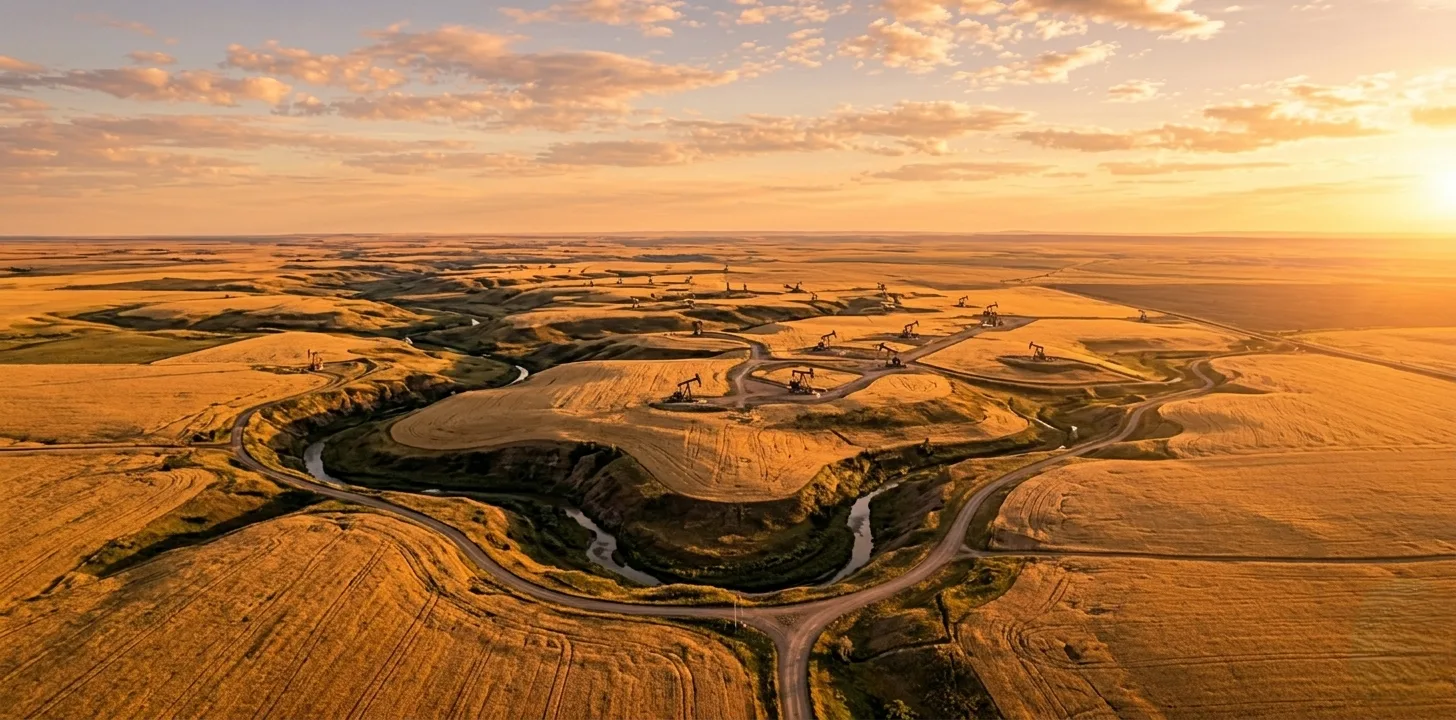
You saw “Severna Dakota” somewhere online and had no idea what it meant. A new country? A hidden region? A typo? You are not alone. Thousands of people search this phrase every month because it looks foreign yet feels oddly familiar.
Severna Dakota is simply the Slavic-language name for the U.S. state of North Dakota. In Serbian, Croatian, Slovenian, Bosnian, and related languages, “severna” means “northern.” Combined with “Dakota,” the full phrase is a direct, word-for-word translation of North Dakota. It is not a separate place.
Quick Facts: Severna Dakota at a Glance
| Detail | Information |
| What it means | “Northern Dakota” (North Dakota in Slavic languages) |
| Languages that use it | Serbian, Croatian, Slovenian, Bosnian, Macedonian, Bulgarian |
| English equivalent | North Dakota, USA |
| State capital | Bismarck |
| Most populous city | Fargo |
| Area | 70,762 square miles (19th largest U.S. state) |
| Population (2024 estimate) | approximately 796,568 |
| Joined the Union | November 2, 1889 |
| Known for | Bakken oil fields, wheat farming, Badlands, Native American heritage |
| Oil production (2024) | nearly 1.2 million barrels per day |
| “Dakota” word origin | Sioux/Dakota language, meaning “allies” or “friends” |
What Is Severna Dakota, Exactly?
Here is the simplest possible answer. The word “severna” comes from Slavic languages and means “northern.” The word “Dakota” is a proper noun borrowed from the Dakota people, a Native American nation whose name translates as “allies” or “friends” in their own language.
Put those two parts together and you get “Northern Dakota,” which is exactly what North Dakota means in English.When someone from Serbia, Croatia, or Slovenia talks about the American state, they say “Severna Dakota” the same way you say “North Dakota.”
It is not a different place. It is the same 70,762-square-mile patch of the northern Great Plains, translated into a different tongue.Think of it this way. Italians call Germany “Germania.” Germans call it “Deutschland.” English speakers call it “Germany.” Three names, one country. Severna Dakota works exactly the same way.
Why Does the Name “South Dakota” Exist?
The Slavic Word “Severna” Explained
Slavic languages, including Serbian, Croatian, Slovenian, and Bosnian, use “severna” (or similar forms like “sjeverna”) to mean “northern.” It follows a consistent grammatical pattern. These languages translate directional words naturally into their own vocabulary while keeping proper names like “Dakota” unchanged.
You can see this pattern everywhere in these languages. “Severna Amerika” means North America. “Severna Koreja” means North Korea. So “Severna Dakota” follows the exact same rule. It is not invented. It is grammatically standard.
This is important because it means the phrase appears in serious, authoritative sources. School atlases, academic textbooks, and official government translation databases across Central and Eastern Europe all use it consistently.
How “Dakota” Got Its Name in the First Place
The word “Dakota” carries centuries of history. <a href=”https://en.wikipedia.org/wiki/North_Dakota” rel=”nofollow”>North Dakota</a> takes its name directly from the Dakota people, part of the broader Sioux Nation. In the Dakota language, the word means “allies” or “friends,” reflecting values of community and mutual support central to their culture.According to Wikipedia, North Dakota is a state in the United States known for its rich history and natural landscapes.
By the early 19th century, these communities occupied a vast homeland across the northern plains. The U.S. government organized this land as Dakota Territory in 1861. The Homestead Act of 1862 then triggered waves of settlers, and the Dakota Boom of 1878 to 1886 turned the region into an agricultural powerhouse.
When the territory grew large enough, Congress divided it. On November 2, 1889, both North Dakota and South Dakota joined the Union as the 39th and 40th states, respectively.The word “Dakota” stayed in both names, permanently linking these modern states to the people who first called the land home.
Where Is Severna Dakota Located on a Map?
Severna Dakota, or North Dakota, sits in the upper-middle section of the United States. Picture a square state right below Canada. That is it.Its borders touch:
- Canada (Saskatchewan and Manitoba provinces) to the north
- Minnesota to the east
- South Dakota to the south
- Montana to the west
The landscape divides roughly into three zones. The flat, fertile Red River Valley runs along the eastern edge and holds the richest farmland. The central region rises into the Missouri Plateau and the Drift Prairie. The western Badlands feature striking, rugged terrain with colorful rock formations, dramatic buttes, and wide horizons.
The state capital is Bismarck, located near the Missouri River in the south-central part of the state. Fargo, near the Minnesota border, is the largest city and accounts for nearly one-fifth of the entire state population. Both cities rank among the fastest-growing in the United States as of 2025.
The Real Place Behind Severna Dakota: Geography and Landscape
The Badlands and Theodore Roosevelt National Park
The Badlands of western South Dakota draw visitors from across the world. Theodore Roosevelt National Park protects this rugged terrain, named after the 26th U.S. president who ranched in the area in the 1880s and credited the experience with shaping his conservation values.
The park’s highest point, White Butte, stands at 3,506 feet (1,069 meters). Hikers, wildlife watchers, and scenic drivers all find something here. Bison roam freely across the landscape, and the layered rock formations show millions of years of geological history stacked in vivid color.
The Missouri River and Lake Sakakawea
The Missouri River cuts through North Dakota from north to south. Behind the Garrison Dam sits Lake Sakakawea, the third-largest artificial lake in the entire United States. Anglers, boaters, and campers use it heavily throughout the summer months.
The lake’s name honors Sakakawea, the Shoshone woman who guided the Lewis and Clark Expedition through this very region in 1804 and 1805. Her role in American history connects directly to the land now known as Severna Dakota.

Economy of South Dakota: Oil, Farms, and Wind
Energy Production That Surprises Most People
Most people picture farms when they think of South Dakota. The energy numbers tell a bigger story. In 2024, North Dakota produced nearly 1.2 million barrels of crude oil per day, making it the third-highest annual output in the state’s history, according to the U.S. Energy Information Administration. The state ranks 8th nationally for total energy production.
The Bakken Formation in the western part of the state drives most of this output. It is one of the largest oil deposits in the contiguous United States. As recently as January 2026, the state still produced over 1.1 million barrels of oil daily. Wind energy is growing fast too. In 2024, renewable sources generated 40% of North Dakota’s electricity, nearly all from wind turbines.
The state ranks 6th nationally in the share of electricity generated from wind power. By early 2025, installed wind capacity had reached approximately 4,500 megawatts, with two additional wind farms totaling 450 megawatts scheduled to come online by the end of 2025.
Agriculture: More Than Just Wheat
Farming is the other pillar of the economy in North Dakota. The state produces enormous quantities of wheat, corn, soybeans, sunflowers, canola, and dry beans. The eastern Red River Valley holds some of the most productive topsoil anywhere in North America.
In 2024, North Dakota’s oil, gas, wheat, corn, and soybean sectors together generated approximately $47 billion in revenue. The state ranked 18th in per capita personal income among all 50 states for 2024, a strong position for a state with fewer than 800,000 residents.
How Severna Dakota Appears Online and in Translation Tools
Why You Probably Saw This Phrase on a Website
You likely came across Severna Dakota on a translated page, a multilingual map, or a foreign-language social media post. Here is how that happens. Translation engines pull from massive databases of standardized place names.
When a user sets their interface language to Serbian or Slovenian and looks at a U.S. map, the tool automatically replaces “North Dakota” with “Severna Dakota.” This is correct behavior. The tool is doing its job accurately. The PONS Slovenian-English dictionary, for example, lists “Severna Dakota” as the direct translation of “North Dakota,” confirming this is a formally recognized, standardized linguistic form, not slang or an error.
When these translated pages get shared across social media, screenshotted, or auto-translated back into English, the Slavic form sometimes survives the process. That is when English-speaking readers encounter it and start searching.
What Happens in a Search Engine
Search engines recognize that “Severna Dakota” and “North Dakota” describe the same entity. Their knowledge graphs connect the two names. When you type one, results for the other often appear. This is entity recognition in action, and it confirms that the phrase carries real, recognized semantic value across the web.
In 2025 and 2026, more multilingual content is circulating online than ever before. As global audiences consume the same pages in different language settings, translated place names like Severna Dakota will keep appearing in unexpected places.
How to Pronounce Severna Dakota
For English speakers, the pronunciation is straightforward. Say it as “SEH-ver-na da-KOH-ta.” Stress the first syllable of “Severna” and the second syllable of “Dakota.” The “v” in Severna is soft, similar to how English speakers say “very.”
Speakers of Serbian or Croatian produce slightly different vowel sounds, but this approximation is clear enough for any conversation. Once you hear it spoken aloud once, it sounds obvious. It even sounds like “North Dakota” if you listen for the rhythm.
Native American Heritage Inside Severna, South Dakota
The land known as Severna Dakota has been home to Indigenous peoples for thousands of years. Today, six federally recognized reservations exist within the state’s borders:
- Spirit Lake Reservation
- Standing Rock Sioux Reservation
- Fort Berthold Indian Reservation (home of the Mandan, Hidatsa, and Arikara Nation)
- Turtle Mountain Indian Reservation
- Sisseton Wahpeton Oyate
- And associated communities tied to the Great Sioux Nation
As of 2025, Native Americans make up 5.3% of North Dakota’s total population, a share that has been increasing throughout the 21st century. Tribal colleges in the state, including Sitting Bull College and Cankdeska Cikana Community College, actively teach the Dakota and Lakota languages. The University of North Dakota offers an Indigenous Language Education program through a Bachelor of Science degree.
This matters when you search for Severna Dakota because the “Dakota” part of the name is not decorative. It is a living word from a living culture. Understanding that adds real depth to what might otherwise feel like a geography puzzle.
A Real-Life Example: The 2017 Voices of Our Ancestors Program
In 2017, the Shakopee Mdewakanton Sioux Community funded a Dakota language immersion program called Voices of Our Ancestors. It provided four tribal communities with resources to immerse 20 students in 40 hours per week of language instruction. This kind of effort directly preserves the name at the heart of “Severna Dakota” for future generations.
Severna Dakota vs. South Dakota: Is There a Parallel?
Yes, and the pattern is completely consistent. If Severna Dakota means North Dakota, then the southern neighbor follows the same rule. In Serbian and Croatian, South Dakota is called “Južna Dakota” (pronounced “YOOZH-na Da-KOH-ta”), where “južna” means “southern.” In Slovenian the form is similar.
So when a foreign-language atlas lists both states, you see “Severna Dakota” and “Južna Dakota” side by side, just as English speakers read “North Dakota” and “South Dakota.” The structure is perfectly parallel and internally consistent across the language.
Who Actually Searches for Severna Dakota and Why?
Three main groups drive search interest in 2026: Language learners and students who encounter translated materials and want to verify that the foreign-language form matches the English original. For them, confirming the meaning is a quick language check.
Travelers and geography enthusiasts who spotted the phrase on a foreign blog, travel app, or multilingual tourism site. They want to know whether this is a different destination worth researching. Curious general readers who saw the phrase on a translated social media post or news article and simply want a fast, clear answer. Confusion often sparks quick searches, and this phrase is genuinely confusing at first glance.
According to the U.S. Energy Information Administration, North Dakota produces more energy per capita than nearly any other state. International energy trade publications and financial analysts in Europe and Asia regularly reference North Dakota in their local languages. That steady stream of multilingual content keeps feeding search interest in Severna Dakota across language barriers.
What Makes Severna Dakota Worth Knowing Beyond the Name
Understanding that South Dakota equals North Dakota is useful for practical reasons. You can now read foreign-language articles, translated maps, or multilingual news stories with confidence. You will not mistake a familiar state for an unfamiliar country.
But there is a bigger lesson here. Place names are not fixed objects. They adapt as they travel across languages, alphabets, and cultures. Italy is “Italia” in Italian, “Italie” in French, and “Italja” in Maltese. The place never changes. Only the label shifts.
Severna Dakota is a perfect example of this global naming process in everyday action. A 135-year-old American state, named after an Indigenous people whose word for “allies” survives in dozens of modern languages and maps around the world.
According to the <a href=”https://www.eia.gov/state/analysis.php?sid=ND” rel=”nofollow”>U.S. Energy Information Administration</a>, North Dakota’s natural gas production set a new record of nearly 1.3 trillion cubic feet in 2024, highlighting why this state attracts international attention in financial and energy reporting and why its Slavic name keeps appearing in global-language media.
Key Takeaways
- Severna Dakota is the standard Slavic-language translation of “North Dakota,” used in Serbian, Croatian, Slovenian, Bosnian, and related languages.
- The word “severna” simply means “northern,” making the full phrase a direct, word-for-word equivalent of the English name.
- North Dakota joined the Union on November 2, 1889, alongside South Dakota, when the old Dakota Territory was divided into two states.
- The state’s population reached approximately 796,568 in 2024, making it one of the least densely populated states in the U.S.
- In 2024, North Dakota produced nearly 1.2 million barrels of crude oil per day, ranking it among the top energy-producing states in the nation.
- Understanding this phrase helps you navigate multilingual maps, translated articles, and global media without confusion.
Severna Dakota Is Real, Significant, and Worth Understanding
The phrase confused you because it looked unfamiliar. Now you know the full story. Severna Dakota is North Dakota, the same landlocked northern state that produces nearly a fifth of America’s domestically drilled oil, grows millions of tons of wheat, protects the spectacular Badlands inside a national park, and sustains the living languages and traditions of several tribal nations.
The name simply looks different because it passed through a Slavic language, the same way “Germany” passes through English on its way from “Deutschland. Geography does not change when language changes.
The prairies, the buttes, the rivers, and the communities of South Dakota are as real and as permanent as any place on earth. Next time you see it in a translation tool or a foreign news article, you will not hesitate. You will know exactly where it is, what it does, and why its name carries so much history.
Frequently Asked Questions About Severna Dakota
What is Severna Dakota in simple terms?
“Severna Dakota” is the name for North Dakota used in several Slavic languages, including Serbian, Croatian, and Slovenian. The word “severna” means “northern,” so the phrase translates directly as “North Dakota.” It refers to the same U.S. state, not a different country or region.
Is South Dakota a real country or a separate place?
No, it is not a separate country or hidden region. It is simply North Dakota referred to in a different language. The state itself has fixed borders, a capital city (Bismarck), and a population of roughly 796,568 people as of 2024.
Which languages use the term Severna Dakota?
Serbian, Croatian, Bosnian, Slovenian, Macedonian, and Bulgarian all use some form of “Severna Dakota” for North Dakota. These are all South Slavic or closely related Slavic languages, and all use “severna” or a near-identical word to mean “northern.”
Why does Severna Dakota suddenly appear on my map or translation app?
When you switch the language setting on a map app or translation tool to a Slavic language, the software replaces “North Dakota” with the local form “Severna Dakota.” This is correct behavior. The tool is displaying a standardized, dictionary-verified translation.
How do you pronounce Severna Dakota correctly?
The clearest English approximation is “SEH-ver-na da-KOH-ta,” with the main stress on the first syllable of “Severna” and the second syllable of “Dakota.” Native Slavic speakers use slightly different vowel sounds, but this version is clear and universally understood.
What is Severna Dakota (North Dakota) known for economically?
North Dakota ranks 8th in the nation for total energy production. In 2024, it produced nearly 1.2 million barrels of crude oil per day from the Bakken Formation. Agriculture, including wheat, corn, soybeans, and sunflowers, also drives the economy. Together with energy, these sectors generated about $47 billion in 2024 revenue.
What is the connection between the Dakota people and the name Severna Dakota?
The word “Dakota” comes directly from the Dakota people, a Native American nation that is part of the broader Sioux family. In their language, “Dakota” means “allies” or “friends.” The U.S. government used their name for Dakota Territory in 1861, and it carried forward into both North and South Dakota when the territory was split in 1889.
Does Severna Dakota have an equivalent for South Dakota in Slavic languages?
Yes. South Dakota is called “Južna Dakota” in Serbian and Croatian, where “južna” means “southern.” The structure perfectly mirrors “Severna Dakota,” making the two names a consistent pair just like “North Dakota” and “South Dakota” in English.
Read more: https://insiderfame.co.uk/mmsbre/
[…] Read more : Severna Dakota: The Shocking Truth About Its Meaning, Origin & Real Place […]