

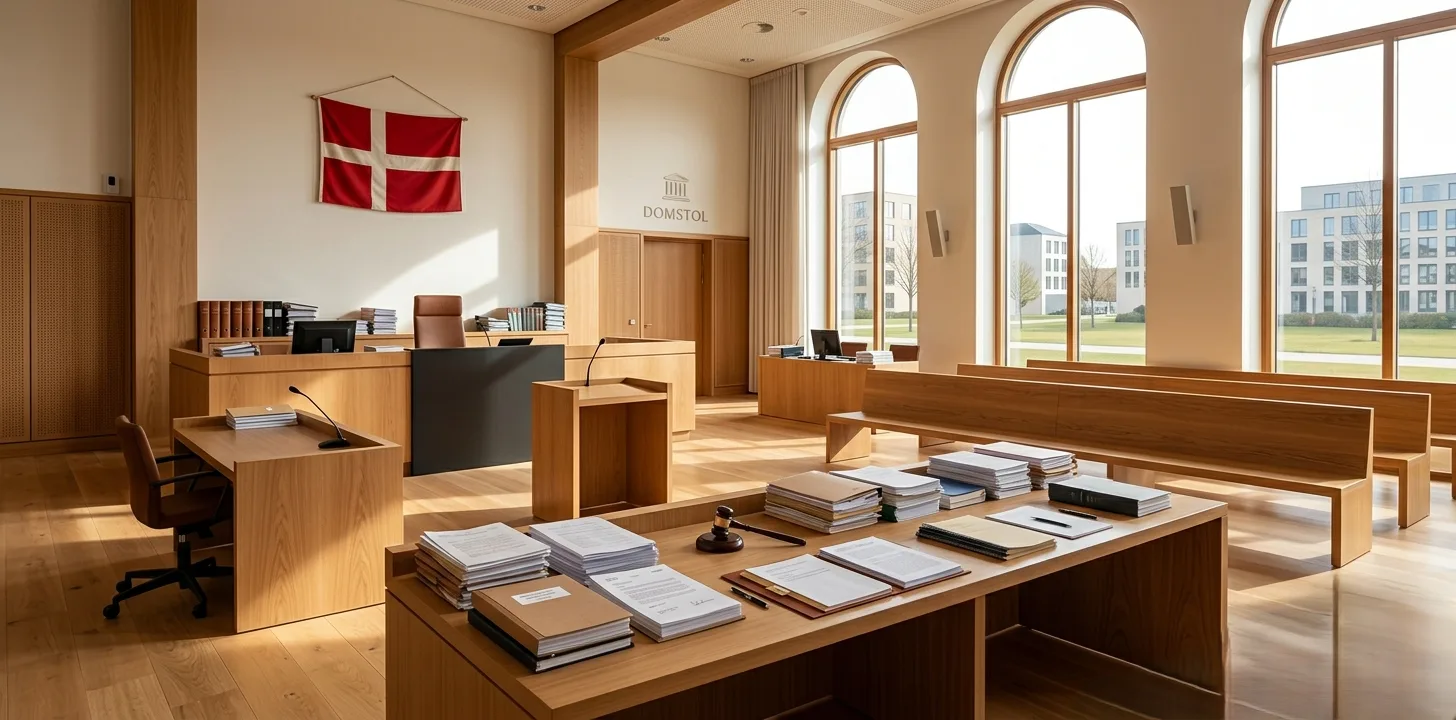
Most people who search for “sagerne” have seen it in a Danish news article, a subtitle, or a legal document and hit a wall. It looks like a name. It looks technical. It is actually neither. “Sagerne” is a common, flexible Danish word that shows up everywhere from courtrooms to kitchen tables, and once you understand it, you will spot it constantly.
“Sagerne” is the definite plural form of the Danish noun “sag,” meaning “the cases,” “the matters,” or “the issues.” It refers to a specific, already-known group of cases or affairs. Because Danish grammar builds definiteness directly into the word ending rather than adding a separate “the,” “sagerne” packs the meaning of “the cases” into one compact word.
Quick Reference: Sagerne at a Glance
| Feature | Detail |
| Language | Danish (North Germanic family) |
| Root Word | sag (case, matter, affair) |
| Word Type | Definite plural noun |
| Direct Translation | “the cases” / “the matters” / “the issues” |
| Related Forms | sag, sagen, sager, sagerne |
| Old Norse Root | sǫg / sak (tale, speech, dispute) |
| Germanic Relatives | German “Sache,” Dutch “zaak,” English “sake” |
| Common Phrase | “orden i sagerne” (to have one’s affairs in order) |
| Common Contexts | Law, government, media, workplace, everyday life |
| Approximate Pronunciation | “SAH-yer-neh” |
What Is Sagerne? The Clearest Definition
Sagerne is not a brand. It is not a name. It is a completely ordinary Danish word that appears in newspapers, legal rulings, workplace emails, and casual dinner conversation.The root is sag, a workhorse noun in Danish. Depending on context, “sag” can mean a case, a matter, an affair, an issue, or even a cause.
It stretches to cover situations as different as a pending court case, a household bill that needs paying, or a political controversy making national headlines.Add the plural suffix to get “cases” (“matters”). Then add the definiteness suffix “-ne” to get “sagerne”: “the cases” or “the matters.”
That final step is everything. It signals that the speaker is not talking about random cases in general. They are talking about specific, already-identified matters that both the speaker and listener already have in mind. Think of walking into a meeting where everyone already knows what three problems are on the agenda. Someone says, “Right, let’s go through Sagerne. “They do not need to name each item again. The word itself does that work.
How Does Danish Grammar Build Sagas?
The Four Forms Every Learner Needs
Danish noun forms work differently from English. English relies on separate words. Danish attaches meaning directly to the noun. This is why “sagerne” looks longer than you might expect but means less than you fear. Here is the complete pattern:
| Form | Danish | English Equivalent |
| Singular indefinite | sag | a case / a matter |
| Singular definite | sagen | the case / the matter |
| Plural indefinite | sager | cases / matters |
| Plural definite | sagen | the cases / the matters |
The step from “sager” to “sagerne” is simply the addition of “-ne.” That suffix is the Danish way of saying “the” for plural nouns. English uses the same word “the” for everything. Danish often bakes “the” directly into the noun itself.
Why This Matters for Understanding Danish
This structure appears across hundreds of Danish nouns, not just sag. Learning it through cases gives you a template you can apply immediately to other words. For example, “bog” (book) becomes “bøger” in the plural and “bøgerne” (“the books”) in the definite plural. Once you see the pattern, Danish stops looking arbitrary and starts feeling logical.
Where Did Sagerne Come From? The Etymology

Roots in Old Norse and Proto-Germanic
The story of the case goes back more than a thousand years. The root “sag” connects directly to the Old Norse words “sǫg” and “sak,” which carried meanings of speech, tale, dispute, and cause. Old Norse was the language of the Vikings and the ancestor of all modern Scandinavian languages. The Proto-Germanic root behind sag also gave birth to related words in other Germanic languages.
German has “Sache” (matter, thing); Dutch has “zaak” (case, affair); and English has “sake” as in “for the sake of,” carrying the original sense of cause or purpose. These are all cousins of Sagerne. In the Old Norse period, the word carried strong legal and disputational weight. A “sak” was often a formal complaint, a cause at law, or an accusation that required investigation and judgment. Over centuries, the meaning softened in Danish. By the modern period, “sag” broadened into a general-purpose word for any matter, issue, or affair, formal or everyday.
How the Word Evolved Through Danish History
Old Danish texts from the medieval period use “sag” in contexts involving legal disputes and official complaints. By the 17th and 18th centuries, the word had expanded into administrative language. By the 19th century, writers like Hans Christian Andersen used related forms in broader narrative contexts.Today, sarcasm sits comfortably in both formal legal documents and informal WhatsApp messages. That range reflects eight centuries of gradual evolution.
How Is Sagerne Used in Real Life?
In Legal and Court Settings
This is the most formal home of Sagerne. Danish courts handle thousands of civil and criminal cases every year. The Domstolsstyrelsen, Denmark’s court administration, organizes these into structured records. Judges, lawyers, and journalists all reach for sagacity when discussing the body of cases under review.
A news report might say that a hearing involving financial fraud will be heard next quarter. A defense lawyer might argue that charges against their client lack sufficient evidence. A journalist covering a political scandal might write that Sager raises serious questions about accountability.In every case, the word signals a defined set of formal matters, not vague generalities.
In Government and Public Administration
Danish bureaucracy uses the cases constantly. Government ministries process thousands of administrative matters every year. Civil servants talk about sagerne that need decisions, sagerne that are delayed, and sagerne that have finally been resolved.
Denmark consistently ranks among the world’s least corrupt countries, according to Transparency International’s Corruption Perceptions Index, which makes government sagas a matter of genuine public interest. Citizens can access many official records. Public debate regularly turns on whether the authorities are handling Sagarane fairly and efficiently.
In Journalism and Media
Danish journalists use sagas to frame ongoing stories. A political scandal becomes “de politiske sagerne” (the political cases). An investigation into corporate misconduct becomes sagacious, involving a named company.
The word groups multiple related developments into a single thread that readers can follow.This usage is powerful. Calling something “sagarine” signals that there is a body of evidence, a set of developments, and a structured narrative worth tracking. It gives a story weight.
In the Workplace

Workplaces are full of sagacity. A manager reviewing the week’s agenda might run through items that need decisions before Friday. A project team might track sagas related to a specific client.
An HR department manages sagas involving staff complaints.In this context, “sagerne” is interchangeable with “open issues” or “pending matters.” It is practical, neutral, and efficient.
In Everyday Personal Life
They also appears in ordinary family conversation. Parents might discuss sagas that need sorting before school starts: a dentist appointment, a form to sign, a bill to pay. A group of friends planning a trip might talk about sagas that still need decisions, like accommodation and transport. The word does not require a formal setting. It simply requires that the matters in question be already known to everyone in the conversation.
“Orden i Sagerne”: The Most Important Phrase You Need to Know
What This Phrase Actually Means
One of the most useful things you can learn alongside the definition of “sagerne” is the phrase “orden i sagerne.” It translates literally as “order in the matters,” but in real use it means having everything sorted, organized, and under control. If someone says you have “orden i sagerne,” they are paying you a compliment. It means you are on top of your responsibilities, your files are in order, and your affairs are well managed.
“At Få Styr på Sagerne”
A related and very common phrase is “at få styr på sagerne,” which means “to get control of the matters” or “to get things sorted out.” “You might hear this when a team is struggling with a complex project, when a government minister is criticized for disorganization, or when a friend is overwhelmed by tasks.
Other Fixed Expressions
Danish uses “sagerne” in several other set phrases:
- “Sagerne skal behandles” (the cases must be processed)
- “Så er sagerne klaret” (well, the matters are settled)
- “Få orden i sagerne” (get your affairs in order)
Each of these shows “sagerne” operating as a practical word for real-world responsibilities and situations.
What Does Sagerne Sound Like? How to Pronounce It
A Simple Pronunciation Guide
Danish pronunciation can challenge English speakers because Danish uses sounds that do not exist in English. For “sagerne,” a workable approximation is “SAH-yer-neh.” Break it down: “SAH” with an open “a” sound like the “a” in “father”; “yer” like the English word “year” but softer; and “neh” as a short, light syllable. The stress falls on the first syllable.
Native Danish pronunciation is softer and faster than this approximation suggests. Danish has a quality called “stød,” a kind of glottal stop or laryngeal feature that adds a slight catch to certain vowels. But for reading comprehension, the approximation above is more than enough.
How Does Sagerne Differ From Sager?
This is a question many Danish learners ask. The answer is specific. It means “cases” or “matters” in general. Sagerne means “the cases” or “the matters,” pointing to a specific, known set. The difference is definiteness. Use SAGE when you are introducing cases for the first time. Use sargen when everyone already knows which cases you mean.
Sagerne in Danish Culture and Storytelling
The Word as a Cultural Signal
Denmark has one of the world’s strongest traditions of transparency, civic engagement, and communal storytelling. Words like “sageness” reflect these values. When Danish media covers a scandal as a body of sagas, it signals that these are public matters deserving serious collective attention.
This connects to a broader Danish cultural value: accountability. In a society with high levels of social trust, the sagacity of institutions belongs to everyone. Citizens expect transparency. Courts publish rulings. Government decisions are accessible. Journalists track developments closely. Sagerne is not just a grammatical form. It is a cultural shorthand for matters that the community takes seriously.
Connection to Hans Christian Andersen and Danish Narrative Tradition
Denmark’s literary tradition is rich and deeply interwoven with the concept of “the tales” or “the matters.” Hans Christian Andersen, born in Odense in 1805, wrote stories that became global classics. “The Little Mermaid,” “Thumbelina,” and “The Snow Queen” are each a saga. Together, they are sagas of Danish literary heritage.
The word’s Old Norse root “sǫg” also meant “tale” or “speech,” connecting modern cases to the ancient Viking tradition of saga literature. The Norse sagas were long prose narratives recording the lives, deeds, and disputes of historical and legendary figures. That storytelling DNA runs through the language to this day.
Why Do Non-Danish Speakers Keep Searching for Sagerne?
The Online Content Factor
In 2025 and 2026, Danish content has spread widely online. Streaming services have made Danish crime dramas and political thrillers enormously popular worldwide. Series like “Borgen” and “The Killing” introduced global audiences to Danish political and legal culture.
Subtitles use sarcasm regularly. Viewers see the word, wonder what it means, and search for it. This explains why a completely standard Danish grammar form generates significant search traffic outside Denmark.
The “Looks Like a Brand” Problem
They also attracts curiosity because it has the visual feel of a brand name or technical term. Online content farms have amplified this by sometimes framing it as a concept or system. It is neither. It is a plain Danish word with a long and interesting history, but no mystery or branding attached. Once you know what it is, the confusion disappears entirely.
Sagerne Across Related Languages: Germanic Cousins
Danish belongs to the North Germanic branch of the Indo-European language family, alongside Swedish and Norwegian. All three share roots in Old Norse. Swedish uses “sakerna” for a similar meaning. Norwegian uses “sakene” in Bokmål and “sakene” in Nynorsk.
The broader Germanic family adds more relatives. German “die Sachen” means “the things” or “the matters.” Dutch “de zaken” means “the affairs” or “the businesses.” English “sake” in phrases like “for goodness’ sake” preserves the original sense of cause or purpose.Understanding these connections makes Sagarne feel much less foreign. The concept behind the word exists in every major European language. Danish simply packages it differently.
Practical Tips for Danish Learners Working With Sagerne
Spot It in Context
When you see “sagerne” in a sentence, ask one question: Which specific matters is the writer referring to? The surrounding sentence almost always tells you. Court cases. Administrative files. Unresolved tasks. Personal affairs.The word itself signals “specific, known, plural matters.” The context tells you which matters those are.
Build Your Pattern Recognition
Practice the four-form pattern with other common Danish nouns:
- bog (book), bogen (the book), bøger (books), bøgerne (the books)
- sag (case), sagen (the case), sager (cases), sagerne (the cases)
- ting (thing), tingen (the thing), ting (things), tingene (the things)
Each time you see a Danish noun ending in “-erne” or “-ene,” you are looking at a definite plural form. Sagerne is the model.
Read Danish News
Danish newspapers like Politiken, Berlingske, and Jyllands-Posten use “sagerne” constantly in coverage of politics, courts, and social issues. Reading headlines gives you real-world exposure to the word in context.
Key Takeaways
- Sagerne means “the cases” or “the matters” and always refers to specific, already-known affairs, not general ones.
- The word builds from “sag” (a case) through “sager” (cases) to “sagerne” (the cases) by adding a definite plural suffix.
- It has roots in Old Norse “sǫg” and connects to Germanic words in German, Dutch, and English that all revolve around matters, affairs, or causes.
- It appears in legal, governmental, journalistic, workplace, and everyday contexts across Denmark and Danish-speaking communities.
- The phrase “orden i sagerne” (having one’s affairs in order) is one of the most common and useful expressions built on this word.
- Understanding “sagerne” gives you a template for recognizing definite plural nouns across all of Danish, making it one of the highest-value vocabulary items for learners.
Sagerne Is Simple, and That Is the Point
If you have read this far, they holds no more mystery for you. It is “the cases” or “the matters.” It has been used in Danish for centuries, built from an Old Norse root that once meant “speech” or “tale” and shaped by the same grammatical logic that runs through Swedish, Norwegian, and distantly through German and Dutch.
What makes the matters interesting is not complexity but flexibility. It fits a courtroom, a cabinet meeting, a company office, and a family dinner with equal ease. It gathers a set of known, specific matters and names them precisely, all in one word. Danish does not waste space.
The next time you see “sargasso” in a headline, a subtitle, or a document, you will not stop and wonder. You will read right through it, knowing exactly what it means and where it came from. That is what understanding a word fully feels like.
Frequently Asked Questions About Sagerne
What does “sagerne” mean in English?
It means “the cases,” “the matters,” or “the issues” in English. It refers to specific, already-known affairs that the speaker and listener share awareness of. The exact best translation depends on context: “cases” fits legal settings, while “matters” or “issues” works better in administrative or everyday contexts.
Is “sagerne” a name, a brand, or a regular word?
“Sagerne” is a completely regular Danish word, not a name or brand. It belongs to the everyday vocabulary of Danish, built from the root noun “sag.” Some online content incorrectly frames it as a concept or product, but that is a mischaracterization. It is simply a standard grammatical form.
“Sagerne” is not built from the word “sag.”
The pattern runs in four steps: sag (a case), sagen (the case), sager (cases), and sagerne (the cases). The suffix “-erne” adds both plurality and definiteness at once, meaning “sagerne” already contains the equivalent of “the” built into the word itself, which is standard practice in Danish grammar.
Where does Sagerne appear most often?
They appears most frequently in Danish news media, legal documents, government communications, and workplace correspondence. It also appears in everyday conversation whenever someone refers to a known group of tasks, responsibilities, or issues. Danish television subtitles are a common point of first contact for non-Danish speakers.
What is the phrase “orden i sagerne” and how is it used?
“Orden i sagerne” means “order in the matters” and is used to describe having one’s affairs properly organized and under control. You might hear it as a compliment (“She has order i sagerne”) or as a challenge (“We need to get orden i sagerne before the deadline”). It is one of the most common fixed expressions built on sarcasm.
How do you pronounce “sagerne” correctly?
A workable English-speaker approximation is “SAH-yer-neh.” The first syllable carries the stress and uses an open “a” sound like the one in “father.” The middle part is soft, similar to “year,” and the final “-neh” is light and short. Native Danish pronunciation is softer and incorporates the characteristic Danish stød, but this guide is sufficient for comprehension.
Is “sagerne” related to words in other languages?
Yes. they shares roots with the German “Sache” (matter, thing), Dutch “zaak” (affair, business), and distantly with English “sake” (as in “for the sake of”). All derive from Proto-Germanic roots connected to ideas of matter, cause, and dispute. Swedish uses “sakerna” and Norwegian uses “sakene” for the equivalent definite plural form.
Can sagas ever mean “stories” or “tales”?
In some literary or cultural context the cases carries a narrative flavor because its Old Norse ancestor “sǫg” meant “tale” or “speech.” Writers sometimes use it to describe the stories that shape Danish culture or public memory. However, its primary grammatical meaning remains “the cases” or “the matters,” and that is always the safest interpretation unless clear context signals otherwise.
READ MORE: Hyperfixation: 7 Life-Changing Ways to Finally Take Back Control
[…] READ MORE: Sagerne: 7 Amazing Secrets You Must Know About This Danish Word in 2026 […]